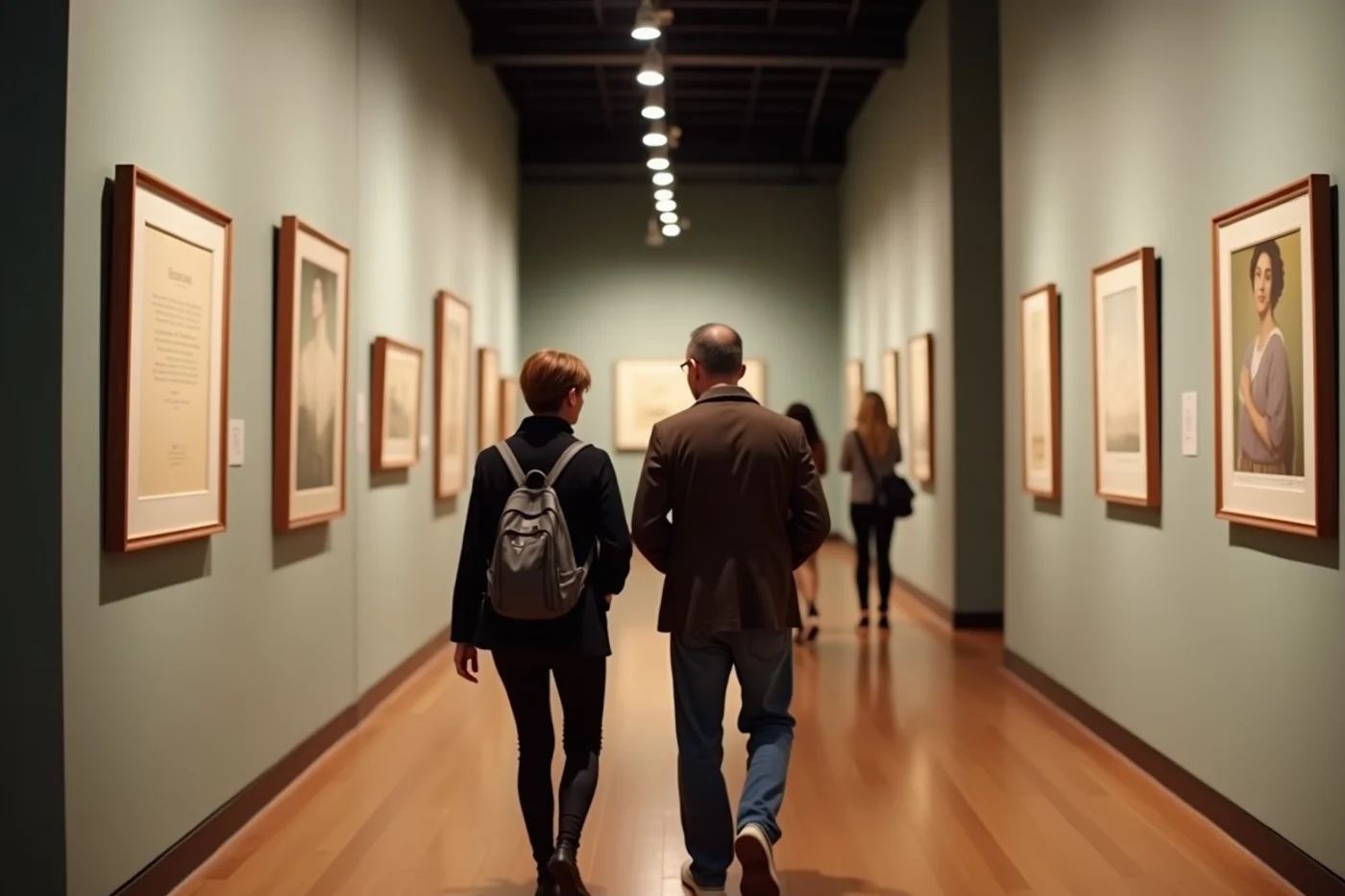
Yes—a walk is a good first date when the two of you want room to talk without committing to a long, formal sit-down. Picture a 35-minute loop on a familiar path that ends near a café: you meet, walk at an easy pace, and decide at the endpoint whether the conversation warrants coffee. That built-in finish keeps the plan comfortable.
Published by First Date Compass
When a walking date fits the first meeting

Walking dates fit an early meeting when dinner feels too formal and neither person wants to promise an entire evening. Light movement occupies the body without turning the outing into an exercise session, while a route with a stated finish accommodates a lunch break or the hour after work. The format also suits people who find a table across from a stranger oddly intense. Looking ahead at a path, storefront, or trees gives conversation somewhere to rest. Nervous hands and eyes have something neutral to do, which softens the sense of being inspected. A short loop also keeps the plan from feeling like a test of endurance.
Good first-date chemistry often feels calmer than people expect. You trade stories, notice a pause without rushing to fill it, and lose track of the planned turnaround by a few minutes. Fireworks are optional; steady interest and easy attention tell you more. Someone who wants a deliberate, seated conversation will likely prefer coffee from the outset. That preference says more about format than anyone's openness to meeting. The walk works when the setting supports the kind of attention both people enjoy.
The benefits and limits of walking side by side
| Feature | Benefit | Constraint | Best Response |
|---|---|---|---|
| Eye contact | Less constant face-to-face attention lets a quiet stretch pass without pressure. | Expressions and small reactions are easier to miss while both people look ahead. | Brief turns toward each other at intersections or during a fuller topic restore attention. |
| Shared surroundings | A storefront, dog, or mural gives the conversation a natural thread. | The same surroundings pull attention away when every few yards bring a new distraction. | Shared prompts work best when conversation returns to the person. |
| Noise and navigation | A calm route keeps you moving at an easy pace. | Traffic, cyclists, crossings, and map checks break longer stories and hide tone. | A quieter path with few turns keeps longer exchanges intact. |
| Reading enjoyment | Reciprocal questions, relaxed pace, and lingering at the endpoint often show engagement. | One quiet stretch says very little on its own. | Look at the whole walk, not one moment without eye contact. |
A simple route makes conversation easier

- A familiar loop or out-and-back stretch with few turns prevents a stream of decisions at every block.
- A bridge, park gate, or public art piece gives the walk a known halfway mark. Once you reach it, the return path is already settled.
- Thirty to forty-five minutes of walking leaves room for a real conversation without trapping either person in an open-ended plan.
- A coffee shop or casual snack counter near the endpoint gives the date somewhere to go next. At the finish, either person can leave cleanly; an extra drink or snack works when both plainly want more time.
Signals that the route or pace is not working
Long strides, frequent catch-up steps, or one person falling silent while trying to keep pace point to a speed problem before they say much about interest. A slower pace, a shorter loop, or a bench offers an immediate correction. The same applies when one person keeps checking the distance or looking ahead for the endpoint.
Traffic that forces repeated repetition changes the date into a series of interrupted fragments. Repeated map checks do much the same. A seated backup venue is the better call when hearing each other becomes difficult, fatigue is obvious, or discomfort enters the outing. Pushing through a route to prove enthusiasm drains the conversation.
Before agreeing to a walk, picture the endpoint as carefully as the route. A short loop with an obvious turn and a nearby place to sit gives the meeting a natural shape. When that setup feels relaxed, walk. When it sounds like an hour of traffic, directions, and forced pace, meet over coffee from the outset.