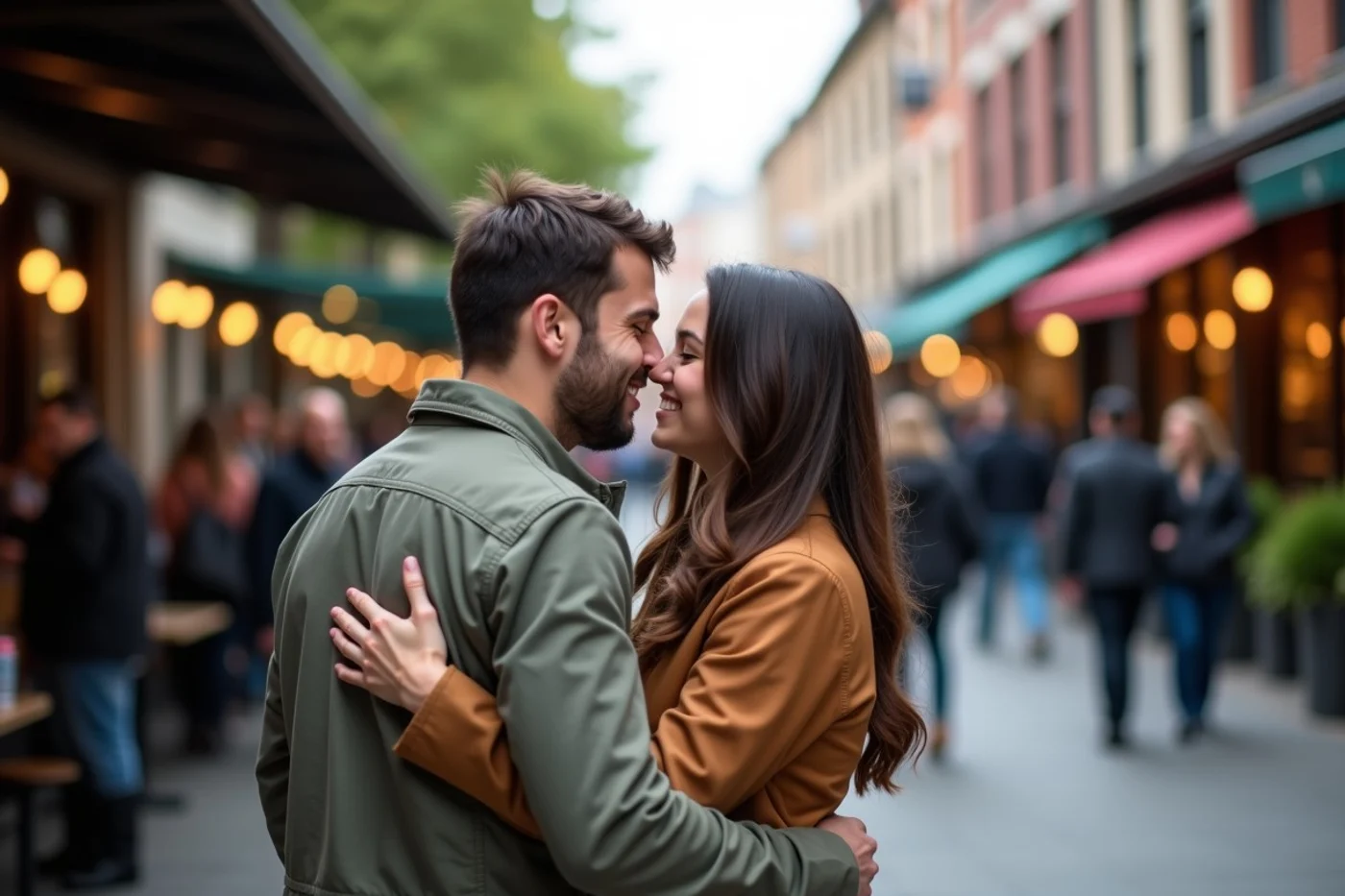
At the meeting point, the best greeting leaves both people room to choose. A hug on a first date is welcome only when it is mutually wanted; a wave, smile, or spoken hello carries the date forward just as well. At a coffee shop door, pausing a few feet apart before walking in leaves space for a hug without assuming one.
Published by First Date Compass
When the First-Date Greeting or Goodbye Arrives

At the first meeting, both people are still orienting themselves: finding each other, settling coats, and deciding where to stand. A brief greeting hug can establish warmth when the approach is open and unhurried, but its absence says little about interest. A walk or coffee date often begins in motion, so a smile and hello may suit the moment. Meeting outside a café or at the start of a stroll also leaves little space for a long, lingering gesture.
By goodbye, you have some shared experience to read. A hug then reflects the rapport that developed through the date: ease in conversation, close distance, and an unhurried farewell. Still, a pleasant date can end with a wave or warm goodbye. No ritual is required. Some people prefer to leave after a first meeting without adding physical contact, even when they enjoyed the time. The goodbye moment has no fixed meaning.
Low-Pressure Ways to Offer a Hug
An offer works best when it is visible but reversible. At hello or goodbye, a pause at a comfortable distance, a turn toward them, and one arm opened slightly without advancing signals interest while leaving room for their choice. They can move closer, stay where they are, or answer with their own greeting. An open arm should remain an invitation, not a reach into their space. This matters at the end of a sidewalk walk, where someone may already be turning toward transit, a car, or the next block.
A wave, smile, handshake, or warm verbal greeting also fits a first meeting. None needs an apology or a long explanation. Offer warmth without closing the distance for them.
Consent Matters More Than Dating Convention
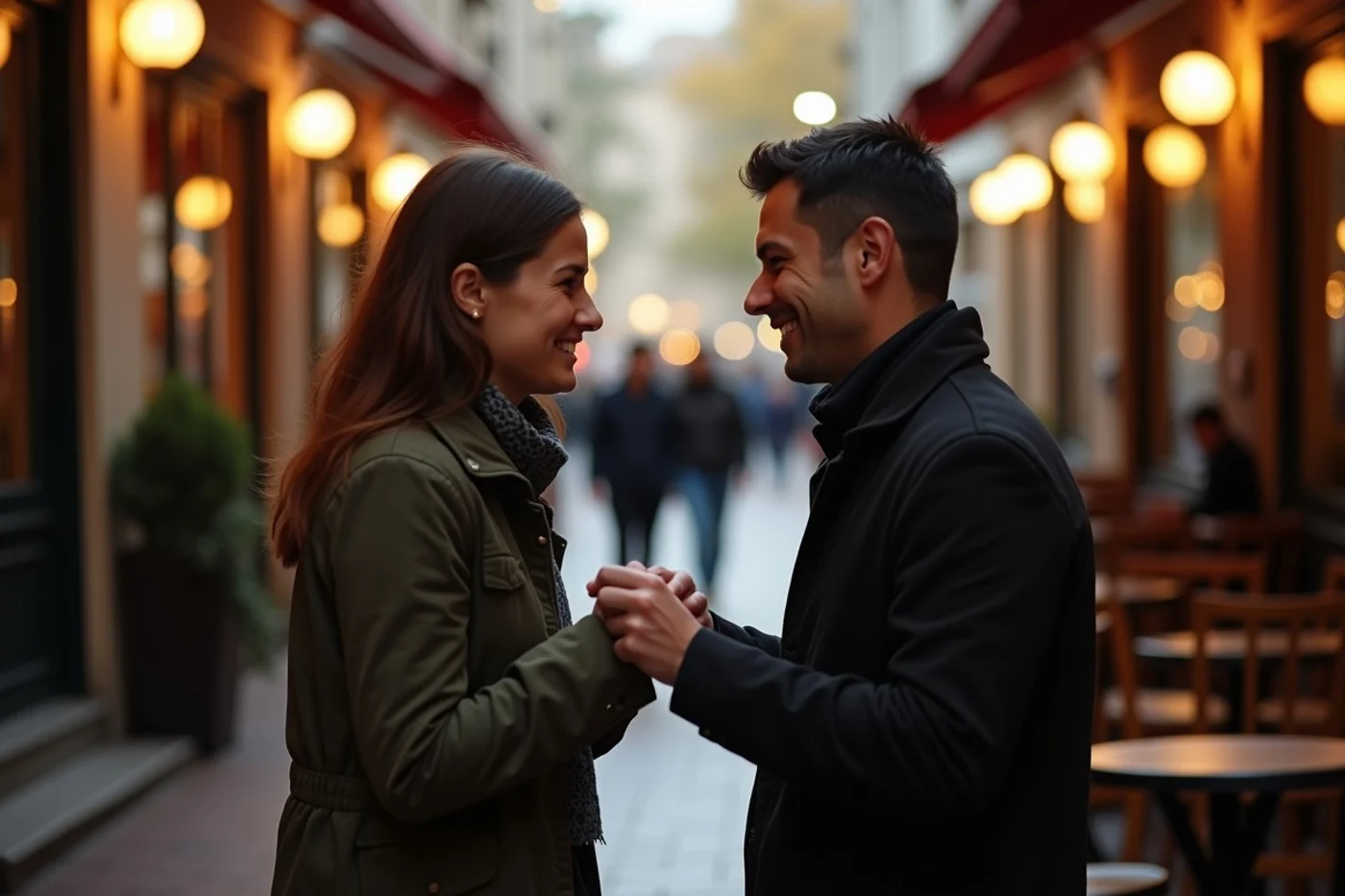
Dating convention has no authority over a person's body. A hug is a choice at either end of the date, even after hours of easy conversation or clear attraction. Familiarity from messaging, a shared neighborhood, or a strong first impression does not change that. When proximity, posture, or timing leaves you unsure, a direct verbal question is more respectful than assigning an answer to a smile. Consent does not need a courtroom tone; a short, unforced check fits the moment. It signals attention, not hesitation.
A declined hug or a step away has communicated enough. The right response is to let the moment move on, with no demand for an explanation, teasing, sulking, or second attempt. A relaxed wave and goodbye preserve dignity for both people. Embarrassment usually comes from trying to repair a small moment that needed no repair.
Body Language Can Suggest Comfort, Not Certainty
- Observable Cue: They turn toward you, slow down nearby, and open their arms. Likely Meaning: Comfort with a hug may be present, though the gesture still deserves a measured response. Best Response: Move slowly enough for a clear response, or use a brief verbal check.
- Observable Cue: They angle their body away, keep a bag between you, step back, or focus on leaving. Likely Meaning: They are signaling a preference for space at that moment. Best Response: Match the distance with a wave or warm goodbye and let the departure stay easy.
- Observable Cue: They smile and seem engaged but remain at the same distance. Likely Meaning: They may be enjoying the date without wanting touch. Best Response: Leave the hug off the table unless they make their interest clear or answer a verbal check positively.
Before meeting, settle on the idea that a wave is a complete greeting and a hug requires mutual movement or a quick verbal check. That prevents a familiar mistake: treating touch as part of the date's job. At goodbye, follow the rapport that actually developed and leave the encounter on the same respectful footing it began.